






Granaries and Warehouses
in category: Granaries and Warehouses
Price


Control of Grain Storage Pests
Why Should Grain Storage Pests Be Controlled?
Storing grain in warehouses involves various problems that the average “bread-eater” usually doesn’t think about. One of these is grain storage pests. Most species are exceptionally well-adapted to living in enclosed spaces. They lead a hidden lifestyle, which means they are often discovered quite late. Their presence can cause significant losses. These unwanted insects lead to a loss of grain weight and a deterioration in grain quality. They contaminate the grain with dead bodies, molted exoskeletons, and feces. Pests in grain storage contribute to mold growth, moisture accumulation, and overheating of the grain, resulting in enormous financial losses. They can also transmit fungi and bacteria.
A lack of a prompt human response to the appearance of grain storage pests can lead to partial damage or even the complete destruction of the harvest. Contaminated, low-quality, and moldy grain is unfit for consumption and sale.
List of products


What storage pests threaten grains?
Effective and rapid elimination of insects from a storage facility is possible by detecting and, above all, correctly identifying feeding traces early on. This allows for better selection of the appropriate treatment or control method. To determine which grain storage pest is infesting a given facility, you can conduct an inspection yourself. To do this, you’ll need a few zip-top bags and a magnifying glass. Any molted exoskeletons, feces, larvae, or adult specimens you find should be placed in the bags, then spread out on white paper and examined closely under a magnifying glass in good lighting. It’s also a good idea to have a professional company inspect your grain.
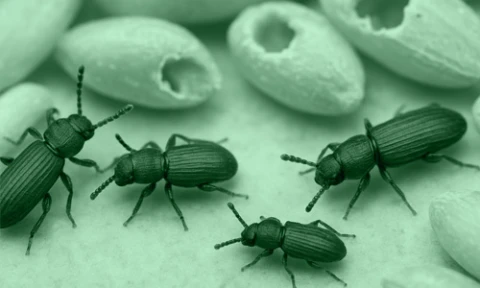
Identifying these uninvited guests in the storage facility is crucial for effective action. The grain weevil (Sitophilus granarius, Sitophila granaria, Calandra granaria) is particularly dangerous. It is a black or light brown beetle with an elongated head and biting mouthparts, measuring about 2–5 mm in length. Its larvae attack the grains of corn, barley, rice, rye, oats, and wheat. It can develop year-round.
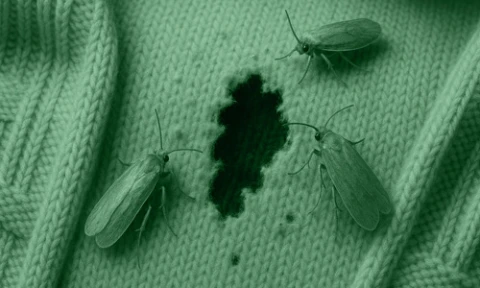
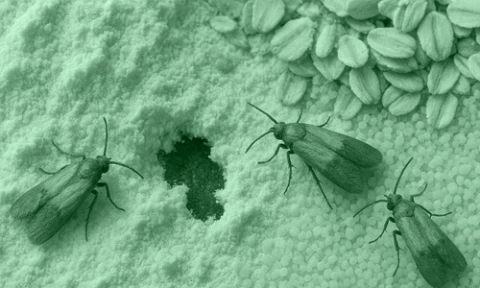
Equally dangerous is the Mediterranean flour moth (Ephestia kuehniella)—a small, butterfly-like insect with gray wings. Adults emerge in the spring. They attack grains and plant-based products. Another flying insect that poses a threat to crops is the grain moth, which can grow up to 8 mm in length. It is a moth with silvery-gray wings and an elongated body.
These are not all of the common grain storage pests. Other dangerous insects include, among others, the grain weevil, the grain moth, the flour beetle, the Surinam grain beetle, the confused flour beetle (Tribolium confusum), and the Indian meal moth (Plodia interpunctella). Effective elimination depends on correctly identifying the insect.
How to control grain pests in storage facilities?
The most common methods for controlling storage insects and preventing their occurrence involve using low temperatures, fresh air, and low humidity. Grain pests in storage facilities can also be eliminated using chemicals and special traps designed to catch the insects. The most important thing is to eliminate them in a way that causes the least harm to the grain. Sometimes, however, mechanical methods prove insufficient. In such cases, it is advisable to hire professionals for pest control, who will select the appropriate treatments based on the type of insects and the extent of the infestation.
Produkty dnia


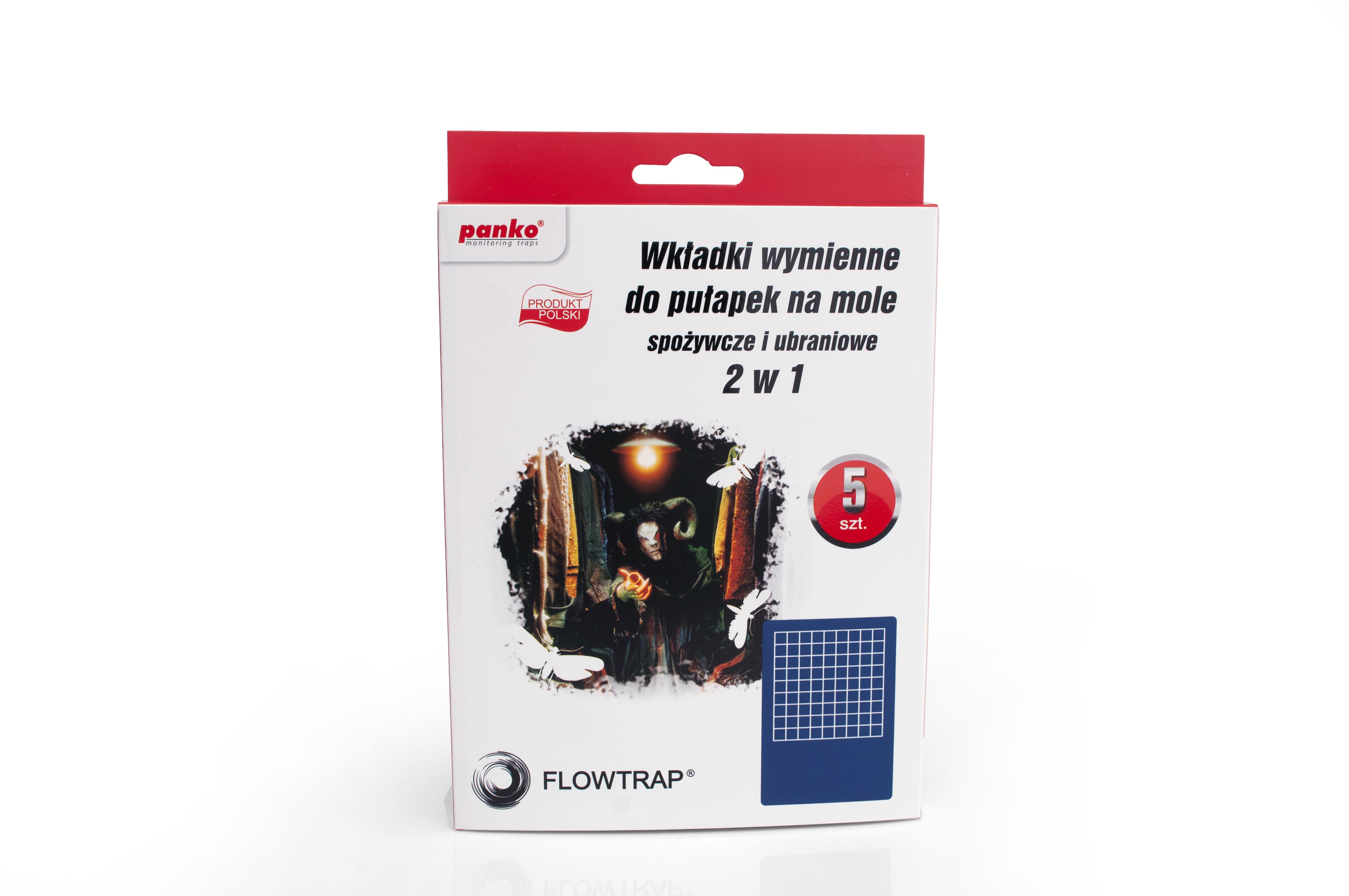
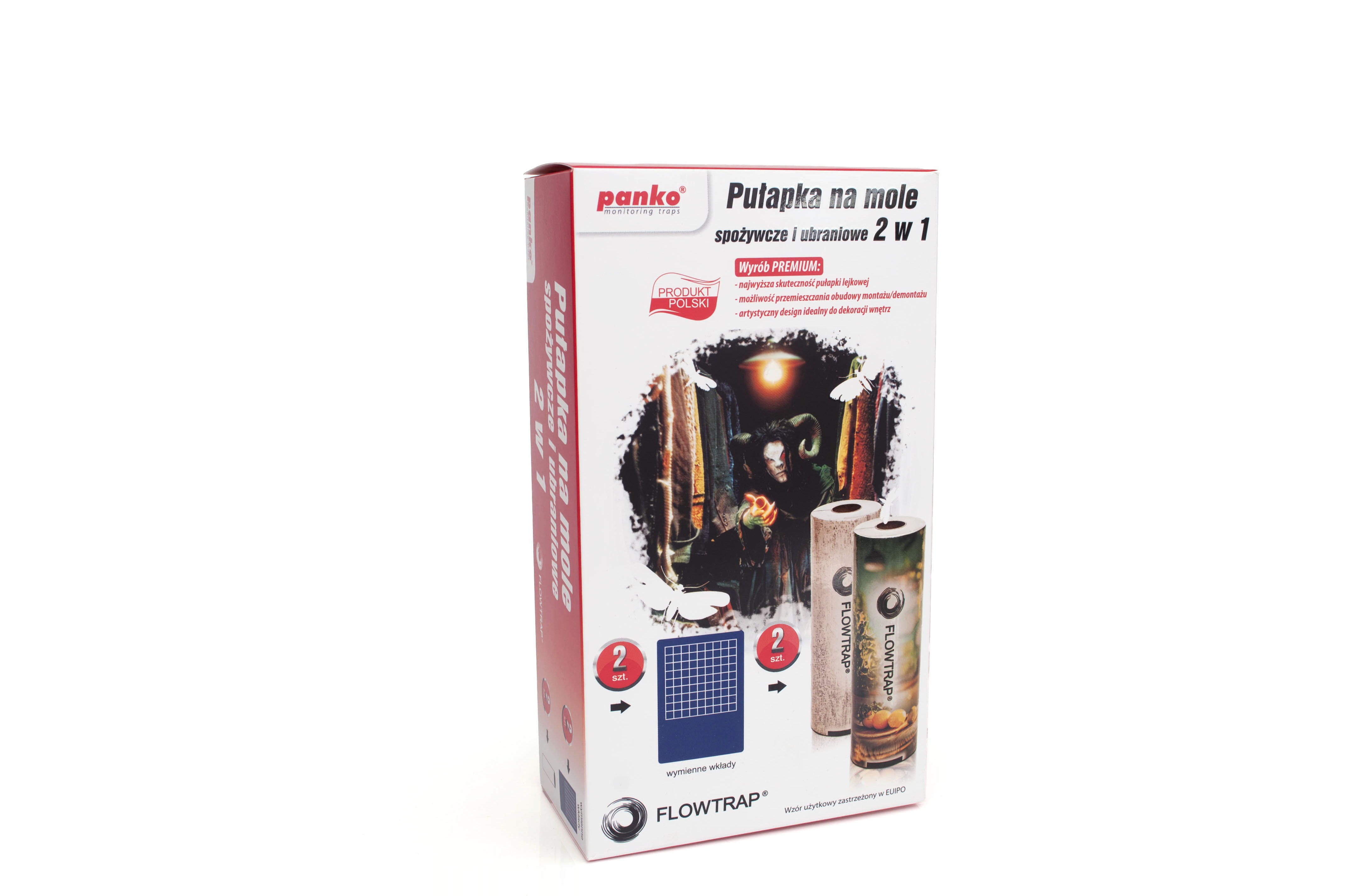
FLOWTRAP - 2-in-1 sticky inserts for the panko® trap, for food and clothes moths (5 pcs.)






Potrzebujesz pomocy?

Porozmawiaj z naszym chatbotem panko® intelligence 24/7
lub zadzwoń do nas:
(Cena za połączenie wg stawek operatora).
 Log in with Facebook
 Log in with Google