





Clothes moths
in category: Clothes moths
Price


Clothes moths—what do they look like and what do they eat?
Clothes moths are a common problem. Adult moths are flying insects that are grayish or beige in color (their larvae are usually white, yellow, or greenish, always with a brown head). Mature moths in a closet do not eat, but they feed on reserves accumulated during their previous stage of development. Immature moths most often feed on natural materials such as wool, felt, fur, feathers, cotton, or linen. Furthermore, food-related dirt—especially human sweat or urine—serves as an excellent food source for them.
The nests built by clothes moths are usually located in a warm and dark place. Adult males fly rather slowly and are easy to catch, while females move more quickly by jumping and lay a large number of eggs. To get rid of these pests, you should use effective clothes moth traps. In this situation, it’s worth checking out the products offered by panko®.
List of products


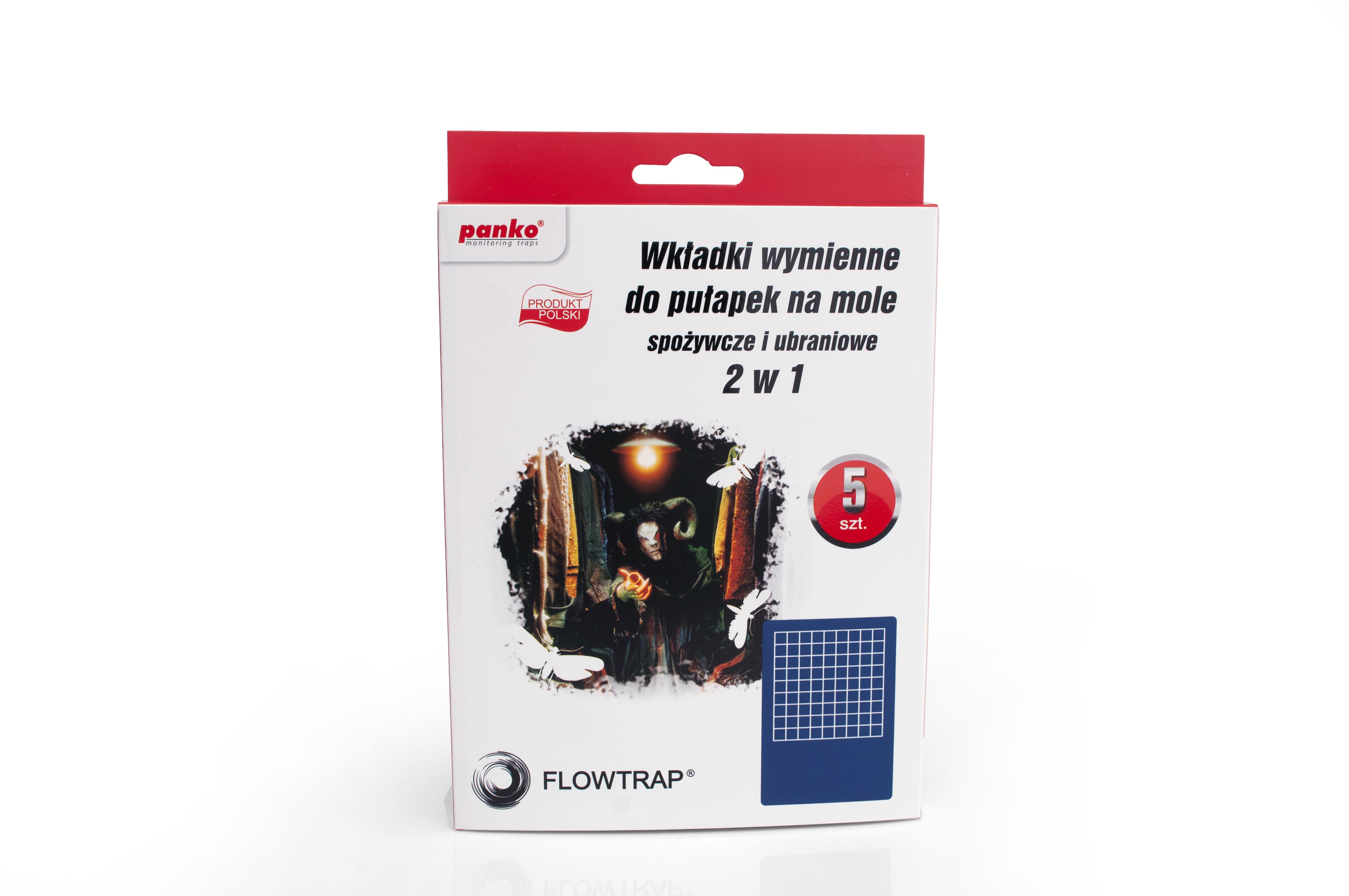
FLOWTRAP - 2-in-1 sticky inserts for the panko® trap, for food and clothes moths (5 pcs.)


Clothes Moths vs. Food Moths
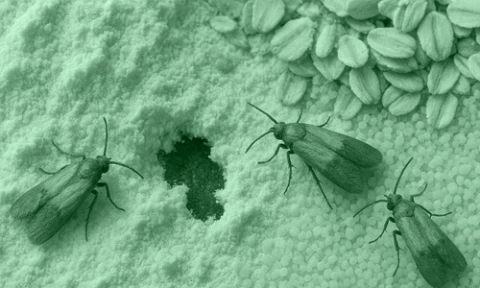
When we see small, flying insects in our homes, we don’t always know right away what we’re dealing with. The Indian meal moth (kitchen moth) and clothes moths look very similar at first glance and are easy to confuse. How can you tell clothes moths apart from food moths? Well, the latter are brownish-gray and can grow up to 10 mm in size. The former, on the other hand, are smaller and straw-yellow in color. Once you’ve identified the type of insect in your closet, you should apply various treatments for clothes moths as soon as possible to eliminate not only the flying, mature insects but also the larvae and immature eggs.
Controlling Clothes Moths
The appearance of clothes moths is not always a sign of poor cleanliness in the home or in the closet. These pests can enter a closet through a window or a ventilation vent, so if you find larvae or flying insects, you should begin treating the clothes moth infestation immediately. First, you need to clean out your closets to remove eggs and cocoons. Combating clothes moths also requires the use of special treatments, as moth eggs are often invisible to the naked eye and can easily be overlooked during cleaning. There are many ready-to-use products on the market that can help address this problem.
We have access to all kinds of insect concentrates and aerosols. To eliminate adult moths, use products designed for clothes moths in the form of pheromone-based sticky traps or scented hangers and balls. The pheromone method is the most effective and safe, and it permanently eliminates the problem of moths in closets. However, it’s worth remembering that the best way to deal with moths in a closet is proper prevention—that is, using preventive products with scents like lavender, lemon, or cloves, and storing clothing under appropriate conditions.
The clothes moth control products available on the panko® website are extremely effective and easy to use. It’s important to act as quickly as possible upon detecting the presence of these insects and to begin treating the clothes moth infestation. This will help prevent significant damage to the clothes in your closet.
Produkty dnia


FLOWTRAP - 2-in-1 sticky inserts for the panko® trap, for food and clothes moths (5 pcs.)






Potrzebujesz pomocy?

Porozmawiaj z naszym chatbotem panko® intelligence 24/7
lub zadzwoń do nas:
(Cena za połączenie wg stawek operatora).
 Log in with Facebook
 Log in with Google